



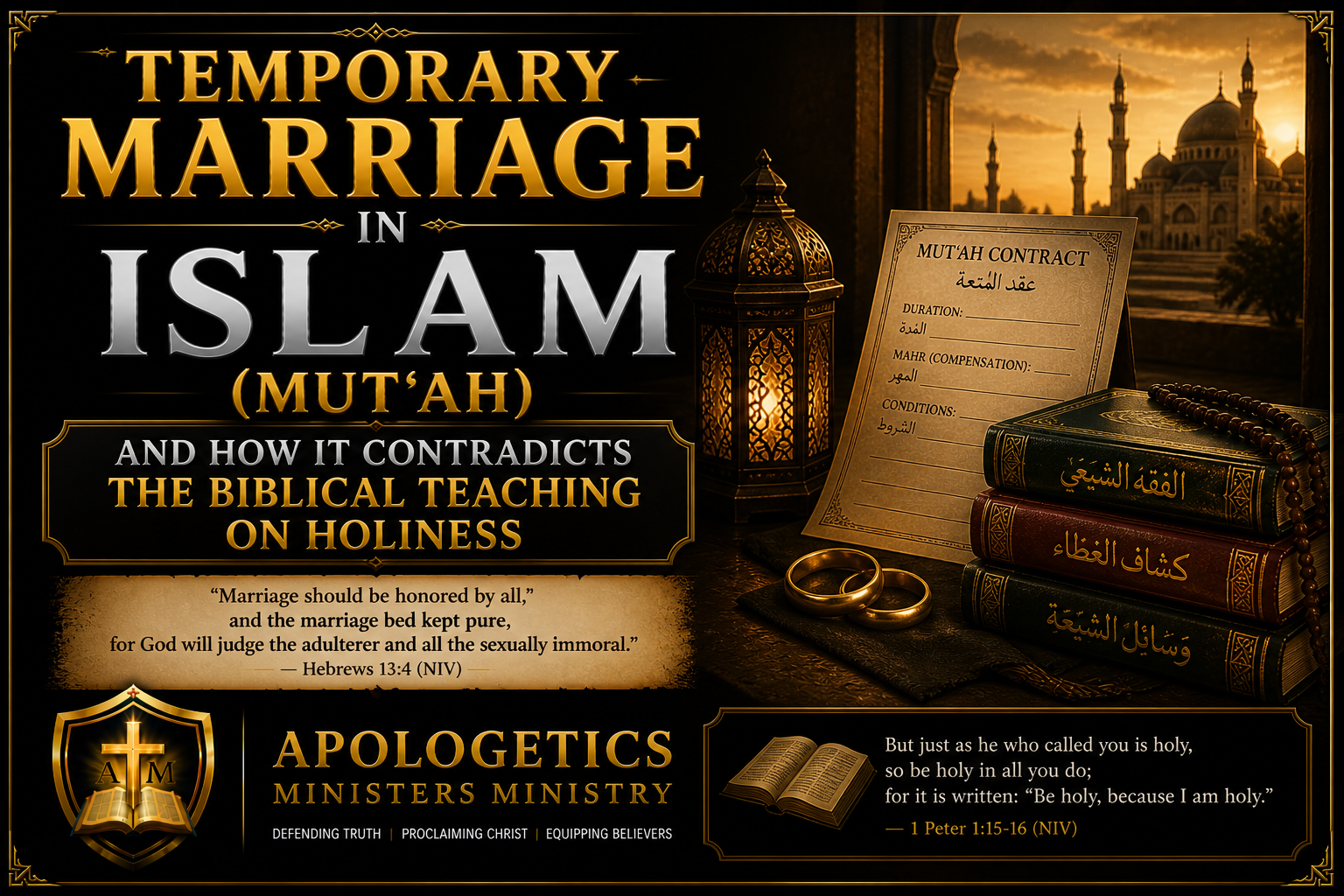

TEMPORARY MARRIAGE IN ISLAM (MUT‘AH)
AND HOW IT CONTRADICTS THE BIBLICAL TEACHING ON HOLINESS
INTRODUCTION
Marriage is not merely a social arrangement; it is a moral, spiritual, and covenantal institution ordained by God. How a religion defines marriage reveals much about its understanding of holiness, sexuality, human dignity, and the nature of God Himself. One of the sharpest contrasts between Islam and biblical Christianity appears in the concept of temporary marriage—known in Islam as Mut‘ah.
This chapter examines temporary marriage in Islam, its theological justification, and its historical practice, and then compares it with the biblical doctrine of marriage and holiness. The conclusion is unavoidable: temporary marriage stands in direct contradiction to biblical holiness, the covenantal nature of marriage, and God’s moral design for sexuality.
Temporary marriage (Arabic: nikāḥ al-mutʿah) is a form of marriage contracted for a fixed period of time, ranging from hours to months or years, with a specified payment (mahr) given to the woman. Once the time expires, the marriage ends automatically, without divorce.
QURAN 4:24.
Arabic
وَٱلْمُحْصَنَٰتُ مِنَ ٱلنِّسَآءِ إِلَّا مَا مَلَكَتْ أَيْمَٰنُكُمْ ۖ كِتَٰبَ ٱللَّهِ عَلَيْكُمْ ۚ وَأُحِلَّ لَكُم مَّا وَرَآءَ ذَٰلِكُمْ أَن تَبْتَغُوا۟ بِأَمْوَٰلِكُم مُّحْصِنِينَ غَيْرَ مُسَٰفِحِينَ ۚ فَمَا ٱسْتَمْتَعْتُم بِهِۦ مِنْهُنَّ فَـَٔاتُوهُنَّ أُجُورَهُنَّ فَرِيضَةً ۚ وَلَا جُنَاحَ عَلَيْكُمْ فِيمَا تَرَٰضَيْتُم بِهِۦ مِنۢ بَعْدِ ٱلْفَرِيضَةِ ۚ إِنَّ ٱللَّهَ كَانَ عَلِيمًا حَكِيمًا
Sahih Intl
And [also prohibited to you are all] married women except those your right hands possess. [This is] the decree of Allah upon you. And lawful to you are [all others] beyond these, [provided] that you seek them [in marriage] with [gifts from] your property, desiring chastity, not unlawful sexual intercourse. So for whatever you enjoy [of marriage] from them, give them their due compensation as an obligation. And there is no blame upon you for what you mutually agree to beyond the obligation. Indeed, Allah is ever Knowing and Wise.
TAFSIR IBN KATHIR VOLUME 2 PAGE 424
(So with those among them whom you have enjoyed, give them their required due,) was revealed about the Mut`ah marriage. A Mut`ah marriage is a marriage that ends upon a predeterminied date. In the Two Sahihs, it is recorded that the Leader of the Faithful `Ali bin Abi Talib said, “The Messenger of Allah prohibited Mut`ah marriage and eating the meat of domesticated donkeys on the day of Khaybar (battle).” In addition, in his Sahih, Muslim recorded that Ar-Rabi` bin Sabrah bin Ma`bad Al-Juhani said that his father said that he accompanied the Messenger of Allah during the conquest of Makkah, and that the Prophet said,
(O people! I allowed you the Mut`ah marriage with women before. Now, Allah has prohibited it until the Day of Resurrection. Therefore, anyone who has any women in Mut`ah, let him let them go, and do not take anything from what you have given them
HADITH ON TEMPORARY MARRIAGE.
Sahih Muslim 1405c
Ibn Uraij reported:
‘Ati’ reported that jibir b. Abdullah came to perform ‘Umra, and we came to his abode, and the people asked him about different things, and then they made a mention of temporary marriage, whereupon he said: Yes, we had been benefiting ourselves by this temporary marriage during the lifetime of the Prophet (ﷺ) and during the time of Abu Bakr and ‘Umar.
وَحَدَّثَنَا الْحَسَنُ الْحُلْوَانِيُّ، حَدَّثَنَا عَبْدُ الرَّزَّاقِ، أَخْبَرَنَا ابْنُ جُرَيْجٍ، قَالَ قَالَ عَطَاءٌ قَدِمَ جَابِرُ بْنُ عَبْدِ اللَّهِ مُعْتَمِرًا فَجِئْنَاهُ فِي مَنْزِلِهِ فَسَأَلَهُ الْقَوْمُ عَنْ أَشْيَاءَ ثُمَّ ذَكَرُوا الْمُتْعَةَ فَقَالَ نَعَمِ اسْتَمْتَعْنَا عَلَى عَهْدِ رَسُولِ اللَّهِ صلى الله عليه وسلم وَأَبِي بَكْرٍ وَعُمَرَ .
Sahih Muslim 1406a
Sabra Juhanni reported:
Allah’s Messenger (ﷺ) permitted temporary marriage for us. So I and another person went out and saw a woman of Bana ‘Amir, who was like a young long-necked she-camel. We presented ourselves to her (for contracting temporary marriage), whereupon she said: What dower would you give me? I said: My cloak. And my companion also said: My cloak. And the cloak of-my companion was superior to my cloak, but I was younger than he. So when she looked at the cloak of my companion she liked it, and when she cast a glance at me I looked more attractive to her. She then said: Well, you and your cloak are sufficient for me. I remained with her for three nights, and then Allah’s Messenger (ﷺ) said: He who has any such woman with whom he had contracted temporary marriage, he should let her off.
وَحَدَّثَنَا قُتَيْبَةُ بْنُ سَعِيدٍ، حَدَّثَنَا لَيْثٌ، عَنِ الرَّبِيعِ بْنِ سَبْرَةَ الْجُهَنِيِّ، عَنْ أَبِيهِ، سَبْرَةَ أَنَّهُ قَالَ أَذِنَ لَنَا رَسُولُ اللَّهِ صلى الله عليه وسلم بِالْمُتْعَةِ فَانْطَلَقْتُ أَنَا وَرَجُلٌ إِلَى امْرَأَةٍ مِنْ بَنِي عَامِرٍ كَأَنَّهَا بَكْرَةٌ عَيْطَاءُ فَعَرَضْنَا عَلَيْهَا أَنْفُسَنَا فَقَالَتْ مَا تُعْطِي فَقُلْتُ رِدَائِي . وَقَالَ صَاحِبِي رِدَائِي . وَكَانَ رِدَاءُ صَاحِبِي أَجْوَدَ مِنْ رِدَائِي وَ كُنْتُ أَشَبَّ مِنْهُ فَإِذَا نَظَرَتْ إِلَى رِدَاءِ صَاحِبِي أَعْجَبَهَا وَإِذَا نَظَرَتْ إِلَىَّ أَعْجَبْتُهَا ثُمَّ قَالَتْ أَنْتَ وَرِدَاؤُكَ يَكْفِينِي . فَمَكَثْتُ مَعَهَا ثَلاَثًا ثُمَّ إِنَّ رَسُولَ اللَّهِ صلى الله عليه وسلم قَالَ “ مَنْ كَانَ عِنْدَهُ شَىْءٌ مِنْ هَذِهِ النِّسَاءِ الَّتِي يَتَمَتَّعُ فَلْيُخَلِّ سَبِيلَهَا ” .
Sahih Muslim 1406g
Sabra b. Ma’bad reported that Allah’s Apostle (ﷺ) permitted his Companions to contract temporary marriage with women in the Year of Victory. So I and a friend of mine from Banu Sulaim went out, until we found a young woman of Banu Amir who was like a young she-camel having a long neck. We proposed to her for contracting temporary marriage with us, and presented to her our cloaks (as dower). She began to look and found me more handsome than my friend, but found the cloak of my friend more beautiful than my cloak. She thought in her mind for a while, but then preferred me to my friend. So I remained with her for three (nights), and then Allah’s Messenger (ﷺ) commanded us to part with them (such women).
وَحَدَّثَنَا يَحْيَى بْنُ يَحْيَى، أَخْبَرَنَا عَبْدُ الْعَزِيزِ بْنُ الرَّبِيعِ بْنِ سَبْرَةَ بْنِ مَعْبَدٍ، قَالَ سَمِعْتُ أَبِي رَبِيعَ بْنَ سَبْرَةَ، يُحَدِّثُ عَنْ أَبِيهِ، سَبْرَةَ بْنِ مَعْبَدٍ أَنَّ نَبِيَّ اللَّهِ صلى الله عليه وسلم عَامَ فَتْحِ مَكَّةَ أَمَرَ أَصْحَابَهُ بِالتَّمَتُّعِ مِنَ النِّسَاءِ – قَالَ – فَخَرَجْتُ أَنَا وَصَاحِبٌ لِي مِنْ بَنِي سُلَيْمٍ حَتَّى وَجَدْنَا جَارِيَةً مِنْ بَنِي عَامِرٍ كَأَنَّهَا بَكْرَةٌ عَيْطَاءُ فَخَطَبْنَاهَا إِلَى نَفْسِهَا وَعَرَضْنَا عَلَيْهَا بُرْدَيْنَا فَجَعَلَتْ تَنْظُرُ فَتَرَانِي أَجْمَلَ مِنْ صَاحِبِي وَتَرَى بُرْدَ صَاحِبِي أَحْسَنَ مِنْ بُرْدِي فَآمَرَتْ نَفْسَهَا سَاعَةً ثُمَّ اخْتَارَتْنِي عَلَى صَاحِبِي فَكُنَّ مَعَنَا ثَلاَثًا ثُمَّ أَمَرَنَا رَسُولُ اللَّهِ صلى الله عليه وسلم بِفِرَاقِهِنَّ .
Sunan Ibn Majah 1963
It was narrated that Ibn ‘Umar said:
“When ‘Umar bin Khattab was appointed caliph, he addressed the people and said: ‘The Messenger of Allah permitted temporary marriage for us three times, then he forbade it. By Allah, If I hear of any married person entering a temporary marriage, I will stone him to death, unless he can bring me four witnesses who will testify that the Messenger of Allah, allowed it after he forbade it’.”
حَدَّثَنَا مُحَمَّدُ بْنُ خَلَفٍ الْعَسْقَلاَنِيُّ، حَدَّثَنَا الْفِرْيَابِيُّ، عَنْ أَبَانَ بْنِ أَبِي حَازِمٍ، عَنْ أَبِي بَكْرِ بْنِ حَفْصٍ، عَنِ ابْنِ عُمَرَ، قَالَ لَمَّا وَلِيَ عُمَرُ بْنُ الْخَطَّابِ خَطَبَ النَّاسَ فَقَالَ إِنَّ رَسُولَ اللَّهِ ـ صلى الله عليه وسلم ـ أَذِنَ لَنَا فِي الْمُتْعَةِ ثَلاَثًا ثُمَّ حَرَّمَهَا وَاللَّهِ لاَ أَعْلَمُ أَحَدًا تَمَتَّعَ وَهُوَ مُحْصَنٌ إِلاَّ رَجَمْتُهُ بِالْحِجَارَةِ إِلاَّ أَنْ يَأْتِيَنِي بِأَرْبَعَةٍ يَشْهَدُونَ أَنَّ رَسُولَ اللَّهِ أَحَلَّهَا بَعْدَ إِذْ حَرَّمَهَا .
BIBLICAL MARRIAGE: A HOLY AND PERMANENT COVENANT
The Bible defines marriage not as a contract, but as a covenant.
“Therefore a man shall leave his father and mother and be joined to his wife, and they shall become one flesh.”
Genesis 2:24
Key features of biblical marriage:
One man and one woman, Exclusive, Permanent, Public, Covenantal
Rooted in holiness
Jesus Himself reaffirmed this standard:
“What God has joined together, let no man separate.”Matthew 19:6
There is no category in Scripture for time-limited marriage. A marriage entered with the intention to end is morally invalid by biblical standards.
HOLINESS AND SEXUAL ETHICS IN THE BIBLE
Biblical holiness is not situational or circumstantial—it is absolute and rooted in God’s character. “Be holy, for I am holy.” Leviticus 19:2, 1 Peter 1:16
Sexual relations are permitted only within the covenant of lifelong marriage.
“Marriage should be honored by all, and the marriage bed kept pure.” Hebrews 13:4
Temporary marriage directly violates this principle because:
It treats sex as consumable
It lacks lifelong faithfulness
It normalizes planned impermanence
Holiness demands self-control, not legal loopholes.
JESUS’ TEACHING VS TEMPORARY MARRIAGE
Jesus radically elevated the standard of sexual holiness:
“Anyone who looks at a woman lustfully has already committed adultery with her in his heart.” Matthew 5:28
Temporary marriage: Institutionalizes lust, Sanctifies desire without transformation, Encourages short-term gratification.
Jesus never lowered God’s standard to accommodate human weakness; instead, He called people to repentance and transformation.
Comments (1)
Olufunmichrist - May 3, 2026
One universe one Savior; Jesus Christ.
Hallelu-yahuah