



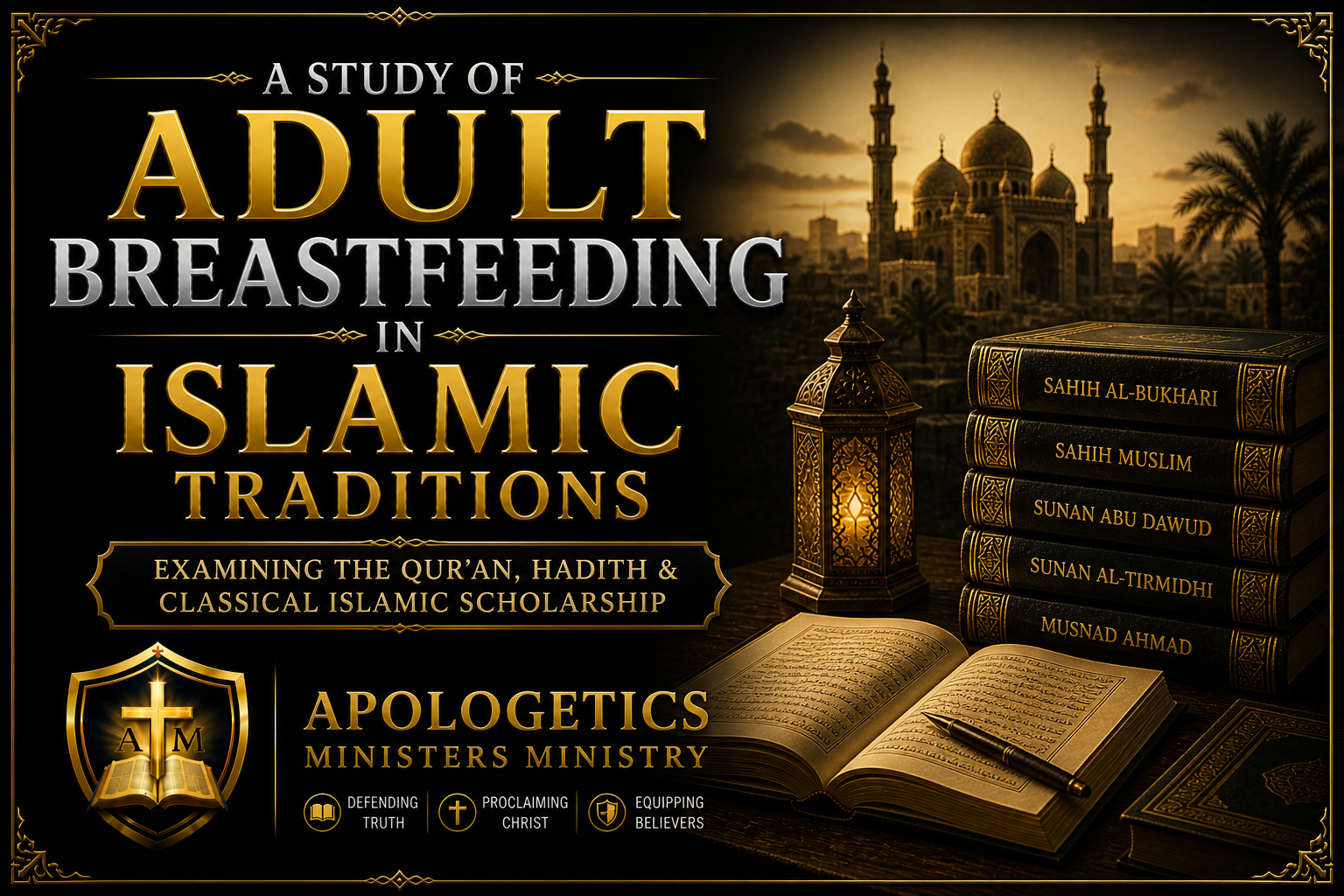

MUHAMMAD AND ADULT BREASTFEEDING IN ISLAM
Adult breastfeeding in Islam is one of the most controversial and troubling doctrines found in the hadith literature, not because of misunderstanding or hostile interpretation, but because of how plainly it is recorded in Islam’s own most trusted sources. The issue is not about nutrition or childcare. It concerns a legal mechanism by which an unrelated adult man could be made legally unmarriageable to a woman through breastfeeding. This doctrine raises serious moral, theological, and ethical questions, especially when examined in light of biblical teaching on modesty, boundaries, and holiness.
The foundation of adult breastfeeding in Islam comes from the case of Salim, the freed slave of Abu Hudhayfa. This incident is recorded most clearly in Sahih Muslim. According to Sahih Muslim 1453 (also numbered 1453a), Aisha reported that Sahla bint Suhayl, the wife of Abu Hudhayfa, came to Muhammad and said that Salim, an adult man, lived in their home and that she felt discomfort about his presence after the Qur’anic rules on adoption were revealed. Muhammad’s response, according to the hadith, was to instruct her to breastfeed Salim so that he would become mahram to her, meaning permanently unmarriageable and legally treated like family.
The wording of Sahih Muslim is direct. Muhammad says, “Breastfeed him and he will become forbidden to you.” The hadith further explains that Salim was already an adult at the time. This is not a weak or obscure report. It is found in Sahih Muslim, one of the two most authoritative Sunni hadith collections, accepted by classical Islamic scholarship.
This teaching did not remain an isolated report. Aisha, one of Muhammad’s wives, explicitly accepted and practiced this ruling. Sahih Muslim 1453 records that Aisha believed adult breastfeeding could establish the same legal relationship as breastfeeding in infancy. She reportedly instructed her nieces and relatives to breastfeed adult men whom she wished to admit into her private space. This shows that the doctrine was not merely theoretical but was understood as legally applicable by one of Islam’s most important figures.
Other wives of Muhammad strongly disagreed. According to Sahih Muslim, they rejected the idea that adult breastfeeding could establish family relations and limited breastfeeding strictly to infancy. This disagreement among Muhammad’s own household is important. It shows that the doctrine was controversial from the very beginning and that there was no unanimous moral clarity even among those closest to Muhammad.
Chapter: Breastfeeding an adult
Sahih Muslim 1453a
A’isha (Allah be pleased with her) reported that Sahla bint Suhail came to Allah’s Apostle (may peace be eupon him) and said:
Messengerof Allah, I see on the face of Abu Hudhaifa (signs of disgust) on entering of Salim (who is an ally) into (our house), whereupon Allah’s Apostle (ﷺ) said: Suckle him. She said: How can I suckle him as he is a grown-up man? Allah’s Messenger (ﷺ) smiled and said: I already know that he is a young man ‘Amr has made this addition in his narration that he participated in the Battle of Badr and in the narration of Ibn ‘Umar (the words are): Allah’s Messenger (ﷺ) laughed.
حَدَّثَنَا عَمْرٌو النَّاقِدُ، وَابْنُ أَبِي عُمَرَ، قَالاَ حَدَّثَنَا سُفْيَانُ بْنُ عُيَيْنَةَ، عَنْ عَبْدِ الرَّحْمَنِ، بْنِ الْقَاسِمِ عَنْ أَبِيهِ، عَنْ عَائِشَةَ، قَالَتْ جَاءَتْ سَهْلَةُ بِنْتُ سُهَيْلٍ إِلَى النَّبِيِّ صلى الله عليه وسلم فَقَالَتْ يَا رَسُولَ اللَّهِ إِنِّي أَرَى فِي وَجْهِ أَبِي حُذَيْفَةَ مِنْ دُخُولِ سَالِمٍ – وَهُوَ حَلِيفُهُ . فَقَالَ النَّبِيُّ صلى الله عليه وسلم ” أَرْضِعِيهِ ” . قَالَتْ وَكَيْفَ أُرْضِعُهُ وَهُوَ رَجُلٌ كَبِيرٌ فَتَبَسَّمَ رَسُولُ اللَّهِ صلى الله عليه وسلم وَقَالَ ” قَدْ عَلِمْتُ أَنَّهُ رَجُلٌ كَبِيرٌ ” . زَادَ عَمْرٌو فِي حَدِيثِهِ وَكَانَ قَدْ شَهِدَ بَدْرًا . وَفِي رِوَايَةِ ابْنِ أَبِي عُمَرَ فَضَحِكَ رَسُولُ اللَّهِ صلى الله عليه وسلم .
Sahih Muslim 1453b
‘A’isha (Allah be pleased with her) reported that Salim, the freed slave of Abu Hadhaifa, lived with him and his family in their house. She (i. e. the daughter of Suhail came to Allah’s Apostle (ﷺ) and said:
Salim has attained (purbety) as men attain, and he understands what they understand, and he enters our house freely, I, however, perceive that something (rankles) in the heart of Abu Hudhaifa, whereupon Allah’s Apostle (ﷺ) said to her: Suckle him and you would become unlawful for him, and (the rankling) which Abu Hudhaifa feels in his heart will disappear. She returned and said: So I suckled him, and what (was there) in the heart of Abu Hudhaifa disappeared.
وَحَدَّثَنَا إِسْحَاقُ بْنُ إِبْرَاهِيمَ الْحَنْظَلِيُّ، وَمُحَمَّدُ بْنُ أَبِي عُمَرَ، جَمِيعًا عَنِ الثَّقَفِيِّ، – قَالَ ابْنُ أَبِي عُمَرَ حَدَّثَنَا عَبْدُ الْوَهَّابِ الثَّقَفِيُّ، – عَنْ أَيُّوبَ، عَنِ ابْنِ أَبِي مُلَيْكَةَ، عَنِ الْقَاسِمِ، عَنْ عَائِشَةَ، أَنَّ سَالِمًا، مَوْلَى أَبِي حُذَيْفَةَ كَانَ مَعَ أَبِي حُذَيْفَةَ وَأَهْلِهِ فِي بَيْتِهِمْ فَأَتَتْ – تَعْنِي ابْنَةَ سُهَيْلٍ – النَّبِيَّ صلى الله عليه وسلم فَقَالَتْ إِنَّ سَالِمًا قَدْ بَلَغَ مَا يَبْلُغُ الرِّجَالُ وَعَقَلَ مَا عَقَلُوا وَإِنَّهُ يَدْخُلُ عَلَيْنَا وَإِنِّي أَظُنُّ أَنَّ فِي نَفْسِ أَبِي حُذَيْفَةَ مِنْ ذَلِكَ شَيْئًا . فَقَالَ لَهَا النَّبِيُّ صلى الله عليه وسلم “ أَرْضِعِيهِ تَحْرُمِي عَلَيْهِ وَيَذْهَبِ الَّذِي فِي نَفْسِ أَبِي حُذَيْفَةَ ” . فَرَجَعَتْ فَقَالَتْ إِنِّي قَدْ أَرْضَعْتُهُ فَذَهَبَ الَّذِي فِي نَفْسِ أَبِي حُذَيْفَةَ .
Sunan Ibn Majah 1943
It was narrated that ‘Aishah said:
“Sahlah bint Suhail came to the Prophet and said: ‘O Messenger of Allah, I see signs of displeasure on the face of Abu Hudhaifah when Salim enters upon me.” The Prophet said: “Breastfeed him.” She said: “How can I breastfeed him when he is a grown man? The Messenger of Allah smiled and said: “I know that he is a grown man.” So she did that, then she came to the Prophet and said: “I have never seen any signs of displeasure on the face of Abu Hudhayfah after that.” And he was present at (the battle of) Badr.
حَدَّثَنَا هِشَامُ بْنُ عَمَّارٍ، حَدَّثَنَا سُفْيَانُ بْنُ عُيَيْنَةَ، عَنْ عَبْدِ الرَّحْمَنِ بْنِ الْقَاسِمِ، عَنْ أَبِيهِ، عَنْ عَائِشَةَ، قَالَتْ جَاءَتْ سَهْلَةُ بِنْتُ سُهَيْلٍ إِلَى النَّبِيِّ ـ صلى الله عليه وسلم ـ فَقَالَتْ يَا رَسُولَ اللَّهِ إِنِّي أَرَى فِي وَجْهِ أَبِي حُذَيْفَةَ الْكَرَاهِيَةَ مِنْ دُخُولِ سَالِمٍ عَلَىَّ . فَقَالَ النَّبِيُّ ـ صلى الله عليه وسلم ـ ” أَرْضِعِيهِ ” . قَالَتْ كَيْفَ أُرْضِعُهُ وَهُوَ رَجُلٌ كَبِيرٌ فَتَبَسَّمَ رَسُولُ اللَّهِ ـ صلى الله عليه وسلم ـ وَقَالَ ” قَدْ عَلِمْتُ أَنَّهُ رَجُلٌ كَبِيرٌ ” . فَفَعَلَتْ فَأَتَتِ النَّبِيَّ ـ صلى الله عليه وسلم ـ فَقَالَتْ مَا رَأَيْتُ فِي وَجْهِ أَبِي حُذَيْفَةَ شَيْئًا أَكْرَهُهُ بَعْدُ . وَكَانَ شَهِدَ بَدْرًا .
From a Christian theological perspective, this raises immediate concerns. In Scripture, boundaries between adults are guarded carefully. Modesty, bodily integrity, and protection from impropriety are central to biblical ethics. The Bible never uses physical intimacy as a legal tool to solve social or household problems. Instead, it commands self-control, separation where necessary, and moral clarity. When boundaries are unclear, Scripture resolves the problem by removing temptation, not redefining it.
The New Testament is explicit about avoiding even the appearance of impropriety. Believers are instructed to treat others with purity and honor, especially within households (1 Thessalonians 4:3–7; 1 Timothy 5:1–2). There is no biblical category in which physical exposure or bodily acts are reclassified as morally neutral for legal convenience. Holiness in Scripture is not flexible to circumstance.
Another serious issue is that Islamic law links adult breastfeeding to legal consequences, not maternal care. Once adult breastfeeding occurs, marriage becomes permanently forbidden, rules of modesty are altered, and private access is allowed. This transforms a deeply personal bodily function into a legal instrument. From a biblical standpoint, this is a profound violation of the purpose of the body, which Scripture teaches is a temple of God, not a tool for legal engineering (1 Corinthians 6:18–20).
The doctrine also exposes a deeper theological problem: revelation appears to resolve social discomfort through physical means rather than moral restraint. Instead of instructing separation, relocation, or clear boundaries, the solution offered in the hadith involves redefining family relations through the body. This stands in sharp contrast to the God revealed in Scripture, who calls His people to flee temptation, not ritualize it.
Defenders of adult breastfeeding often argue that it was a unique case limited to Salim. However, this defense fails on two points. First, Aisha’s actions show that at least one authoritative figure believed it had broader application. Second, even a “one-time exception” attributed to divine instruction raises questions about the nature of holiness and consistency in revelation. In the Bible, God does not solve moral tension by temporarily suspending moral order.
This issue matters because Muhammad is presented in Islam as the best example for all believers (Qur’an 33:21). When actions attributed to him generate confusion, disagreement, and moral discomfort, the credibility of that example must be examined. Biblical prophets are not treated this way. When they fail morally, Scripture records their failure and condemns it. Their actions do not become legal norms.
Jesus Christ again stands in complete contrast. He upheld strict boundaries, honored the body, protected dignity, and never used authority to blur moral lines. He taught that purity begins in the heart and that holiness requires discipline, not accommodation. He did not redefine righteousness to solve social inconvenience.
Adult breastfeeding in Islam is therefore not a minor or obscure topic. It is well documented, widely acknowledged in classical sources, and deeply troubling when measured against biblical standards of holiness, modesty, and moral clarity. It reveals a pattern already seen elsewhere: personal or social difficulty followed by a legal solution that lowers boundaries rather than raising character.
Christian faith calls people upward. It does not solve moral tension by redefining the body or relaxing purity. It calls believers to holiness, even when obedience is difficult. That difference is not small, and it cannot be ignored.
Comments (2)
Ruth Oluwaseun - May 3, 2026
Islam is a deadly religion
Omotuyi O.A. - May 3, 2026
This is pure immorality. It contradicts peaceful marriage ideas. How will you feel as a man if you’re repeated to; that your wife breastfeed your friends or related Adult to disqualify them from marrying your wife?
What a crazy ideology