



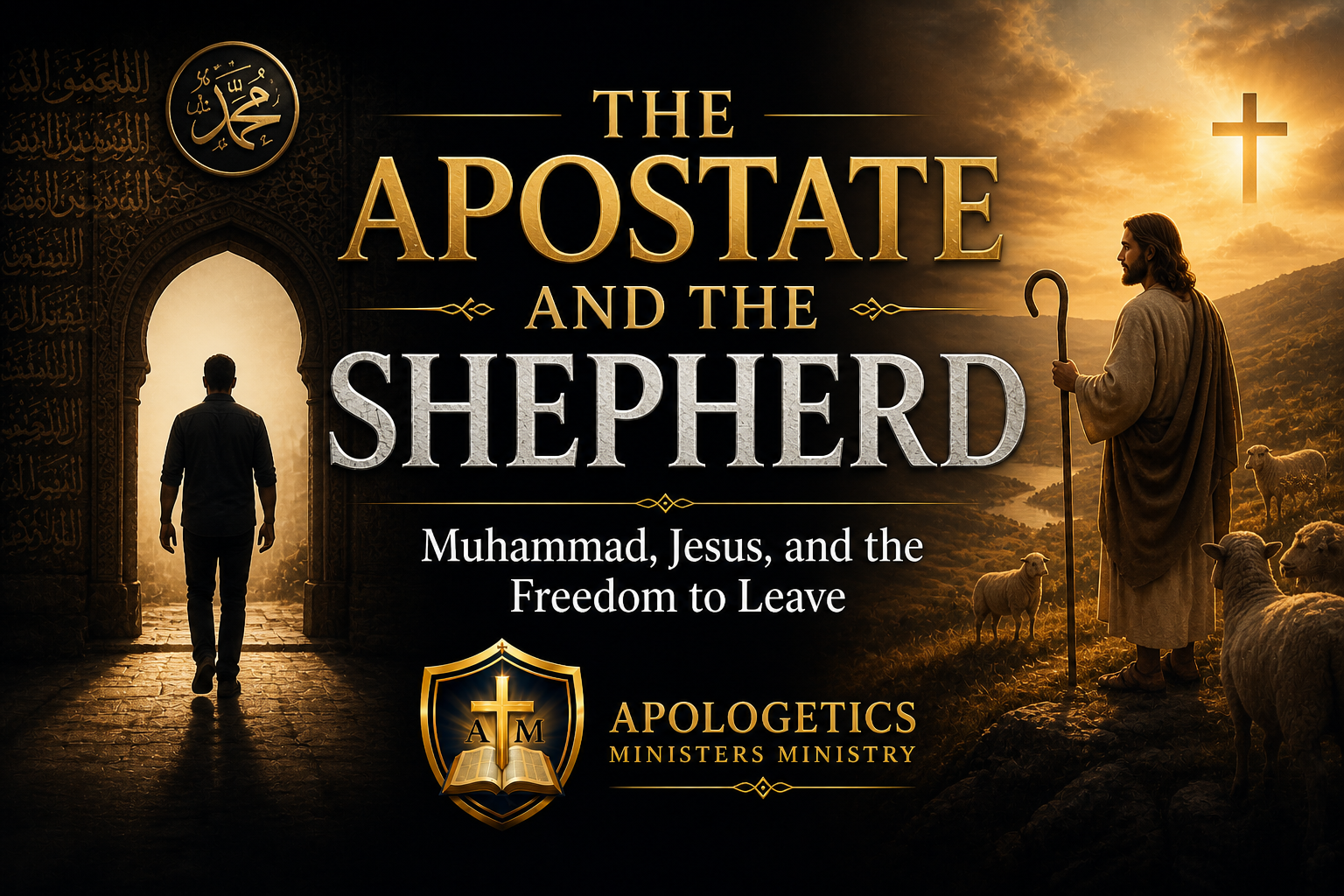
THE APOSTATE AND THE SHEPHERD
Muhammad, Jesus, and the Freedom to Leave
(John 6:60–69)
How a religious leader responds when followers walk away reveals the true nature of his authority. Apostasy—leaving a faith after once embracing it—is one of the clearest tests of whether a system is grounded in coercion or truth, fear or love, power or conviction. When examined honestly, the contrast between Muhammad’s treatment of apostasy in Islamic sources and Jesus’ response to departing disciples in John 6:60–69 could not be sharper.
In Islamic law and tradition, apostasy is not merely a spiritual failure; it is treated as a capital crime. Classical Islamic jurisprudence, drawing from hadith such as “Whoever changes his religion, kill him” (Ṣaḥīḥ al-Bukhārī 6922), developed a legal consensus that leaving Islam deserves death. Apostasy is framed as treason against the religious community and rebellion against Allah’s authority. The apostate is not debated, reasoned with, or allowed to depart peacefully. He is pursued, punished, and silenced. Faith is preserved through force.
Ṣaḥīḥ al-Bukhārī 6922
Narrated `Ikrima:
Some Zanadiqa (atheists) were brought to `Ali and he burnt them. The news of this event, reached Ibn `Abbas who said, “If I had been in his place, I would not have burnt them, as Allah’s Messenger (ﷺ) forbade it, saying, ‘Do not punish anybody with Allah’s punishment (fire).’ I would have killed them according to the statement of Allah’s Messenger (ﷺ), ‘Whoever changed his Islamic religion, then kill him.'”
حَدَّثَنَا أَبُو النُّعْمَانِ، مُحَمَّدُ بْنُ الْفَضْلِ حَدَّثَنَا حَمَّادُ بْنُ زَيْدٍ، عَنْ أَيُّوبَ، عَنْ عِكْرِمَةَ، قَالَ أُتِيَ عَلِيٌّ ـ رضى الله عنه ـ بِزَنَادِقَةٍ فَأَحْرَقَهُمْ فَبَلَغَ ذَلِكَ ابْنَ عَبَّاسٍ فَقَالَ لَوْ كُنْتُ أَنَا لَمْ أُحْرِقْهُمْ لِنَهْىِ رَسُولِ اللَّهِ صلى الله عليه وسلم وَلَقَتَلْتُهُمْ لِقَوْلِ رَسُولِ اللَّهِ صلى الله عليه وسلم “ مَنْ بَدَّلَ دِينَهُ فَاقْتُلُوهُ ”.
AL-RIDDAH: APOSTACY AND PUNISHEMENT
Al-Riddah means rejection of the religion of Islam in favour of any
other religion either through an action or through words of mouth. The
Act of apostasy thus puts an end to one’s adherence to Islam. When one
rejects the fundamental principles of faith (imah) like faith in the
Existence of Allah or the Messengership of His Prophet Muhammad as
contained in the chordal statement of Islam, the Kalimah al-shahadah.
Similarly the rejection of the belief in the Qur’an as the Book of Allah or
the belief of the message contained in it. or the belief in the Day of
Resurrection, or Reward and the Punishment of Allah will all amount lo
apostasy. The rejection of the obligatory ritual practices like Salat
(prayers). Zakat (giving of the poor-rate), fiydm (Fasting in the month
of Ramadan), and Hajj Pilgrimage will also amount to acts of Irtidad.
Likewise.’if one imitates the practices of non-Muslims in their prayers
etc; it will be considered an act of apostasy.
PUNISHEMENT FROM THE HADITH.
Grade: Hasan (Darussalam)
It was narrated from Ibn ‘Umar that:
‘Uthman said: “I heard the Messenger of Allah [SAW] say: ‘It is not permissible to shed the blood of a Muslim except in three cases: A man who commits adultery after having married; or one who kills intentionally, in which case he deserves retaliation; or one who apostatizes after having become Muslim, in which case he deserves to be killed.'”
أَخْبَرَنَا أَبُو الأَزْهَرِ، أَحْمَدُ بْنُ الأَزْهَرِ النَّيْسَابُورِيُّ قَالَ حَدَّثَنَا إِسْحَاقُ بْنُ سُلَيْمَانَ الرَّازِيُّ، قَالَ أَنْبَأَنَا الْمُغِيرَةُ بْنُ مُسْلِمٍ، عَنْ مَطَرٍ الْوَرَّاقِ، عَنْ نَافِعٍ، عَنِ ابْنِ عُمَرَ، أَنَّ عُثْمَانَ، قَالَ سَمِعْتُ رَسُولَ اللَّهِ صلى الله عليه وسلم يَقُولُ “ لاَ يَحِلُّ دَمُ امْرِئٍ مُسْلِمٍ إِلاَّ بِإِحْدَى ثَلاَثٍ رَجُلٌ زَنَى بَعْدَ إِحْصَانِهِ فَعَلَيْهِ الرَّجْمُ أَوْ قَتَلَ عَمْدًا فَعَلَيْهِ الْقَوَدُ أَوِ ارْتَدَّ بَعْدَ إِسْلاَمِهِ فَعَلَيْهِ الْقَتْلُ ” .
Sahih (Darussalam)
It was narrated that ‘Uthman bin ‘Affan said:
“I heard the Messenger of Allah [SAW] say: ‘It is not permissible to shed the blood of a Muslim except in three cases: A man who commits adultery after having married; or one who kills another person, who is to be killed; or who reverts to Kufr after having accepted Islam, who is to be killed.'”
أَخْبَرَنَا مُؤَمَّلُ بْنُ إِهَابٍ، قَالَ حَدَّثَنَا عَبْدُ الرَّزَّاقِ، قَالَ أَخْبَرَنِي ابْنُ جُرَيْجٍ، عَنْ أَبِي النَّضْرِ، عَنْ بُسْرِ بْنِ سَعِيدٍ، عَنْ عُثْمَانَ بْنِ عَفَّانَ، قَالَ سَمِعْتُ رَسُولَ اللَّهِ صلى الله عليه وسلم يَقُولُ “ لاَ يَحِلُّ دَمُ امْرِئٍ مُسْلِمٍ إِلاَّ بِثَلاَثٍ أَنْ يَزْنِيَ بَعْدَ مَا أُحْصِنَ أَوْ يَقْتُلَ إِنْسَانًا فَيُقْتَلُ أَوْ يَكْفُرَ بَعْدَ إِسْلاَمِهِ فَيُقْتَلُ ” .
Grade: Sahih
Ibn ‘Abbas said:
“The Messenger of Allah [SAW] said: ‘Whoever changes his religion, kill him.'”
Grade: Sahih
It was narrated from ‘Ikrimah:
“Some people apostatized after accepting Islam, and ‘Ali burned them with fire. Ibn ‘Abbas said: ‘If it had been me, I would not have burned them; the Messenger of Allah [SAW] said: ‘No one should be punished with the punishment of Allah.’ If it had been me, I would have killed them; the Messenger of Allah [SAW] said: ‘Whoever changes his religion, kill him.'”
أَخْبَرَنَا مُحَمَّدُ بْنُ عَبْدِ اللَّهِ بْنِ الْمُبَارَكِ، قَالَ حَدَّثَنَا أَبُو هِشَامٍ، قَالَ حَدَّثَنَا وُهَيْبٌ، قَالَ حَدَّثَنَا أَيُّوبُ، عَنْ عِكْرِمَةَ، أَنَّ نَاسًا، ارْتَدُّوا عَنِ الإِسْلاَمِ، فَحَرَّقَهُمْ عَلِيٌّ بِالنَّارِ قَالَ ابْنُ عَبَّاسٍ لَوْ كُنْتُ أَنَا لَمْ، أُحَرِّقْهُمْ قَالَ رَسُولُ اللَّهِ صلى الله عليه وسلم ” لاَ تُعَذِّبُوا بِعَذَابِ اللَّهِ أَحَدًا ” . وَلَوْ كُنْتُ أَنَا لَقَتَلْتُهُمْ قَالَ رَسُولُ اللَّهِ صلى الله عليه وسلم ” مَنْ بَدَّلَ دِينَهُ فَاقْتُلُوهُ ” .
Grade: Sahih
It was narrated from Abu Burdah bin Abi Musa Al-Ash’ari, from his father:
“That the Prophet [SAW] sent him to Yemen, then he sent Mu’adh bin Jabal after that. When he arrived he said: ‘O people, I am the envoy of the Messenger of Allah [SAW] to you.’ Abu Musa gave him a cushion to sit down, then a man was brought who had been a Jew, then he became a Muslim, then he reverted to Kufr. Mu’adh said: ‘I will not sit down until he is killed; this is the decree of Allah and His Messenger,’ (saying it) three times. When he was killed, he sat down.”
حَدَّثَنَا مُحَمَّدُ بْنُ بَشَّارٍ، حَدَّثَنِي حَمَّادُ بْنُ مَسْعَدَةَ، قَالَ حَدَّثَنَا قُرَّةُ بْنُ خَالِدٍ، عَنْ حُمَيْدِ بْنِ هِلاَلٍ، عَنْ أَبِي بُرْدَةَ بْنِ أَبِي مُوسَى الأَشْعَرِيِّ، عَنْ أَبِيهِ، أَنَّ النَّبِيَّ صلى الله عليه وسلم بَعَثَهُ إِلَى الْيَمَنِ ثُمَّ أَرْسَلَ مُعَاذَ بْنَ جَبَلٍ بَعْدَ ذَلِكَ فَلَمَّا قَدِمَ قَالَ أَيُّهَا النَّاسُ إِنِّي رَسُولُ رَسُولِ اللَّهِ إِلَيْكُمْ . فَأَلْقَى لَهُ أَبُو مُوسَى وِسَادَةً لِيَجْلِسَ عَلَيْهَا فَأُتِيَ بِرَجُلٍ كَانَ يَهُودِيًّا فَأَسْلَمَ ثُمَّ كَفَرَ فَقَالَ مُعَاذٌ لاَ أَجْلِسُ حَتَّى يُقْتَلَ قَضَاءُ اللَّهِ وَرَسُولِهِ . ثَلاَثَ مَرَّاتٍ . فَلَمَّا قُتِلَ قَعَدَ .
Sahih al-Bukhari 5057
Narrated `Ali:
I heard the Prophet (ﷺ) saying, “In the last days (of the world) there will appear young people with foolish thoughts and ideas. They will give good talks, but they will go out of Islam as an arrow goes out of its game, their faith will not exceed their throats. So, wherever you find them, kill them, for there will be a reward for their killers on the Day of Resurrection.”
حَدَّثَنَا مُحَمَّدُ بْنُ كَثِيرٍ، أَخْبَرَنَا سُفْيَانُ، حَدَّثَنَا الأَعْمَشُ، عَنْ خَيْثَمَةَ، عَنْ سُوَيْدِ بْنِ غَفَلَةَ، قَالَ عَلِيٌّ رضى الله عنه سَمِعْتُ النَّبِيَّ صلى الله عليه وسلم يَقُولُ “ يَأْتِي فِي آخِرِ الزَّمَانِ قَوْمٌ حُدَثَاءُ الأَسْنَانِ، سُفَهَاءُ الأَحْلاَمِ، يَقُولُونَ مِنْ خَيْرِ قَوْلِ الْبَرِيَّةِ، يَمْرُقُونَ مِنَ الإِسْلاَمِ كَمَا يَمْرُقُ السَّهْمُ مِنَ الرَّمِيَّةِ، لاَ يُجَاوِزُ إِيمَانُهُمْ حَنَاجِرَهُمْ، فَأَيْنَمَا لَقِيتُمُوهُمْ فَاقْتُلُوهُمْ، فَإِنَّ قَتْلَهُمْ أَجْرٌ لِمَنْ قَتَلَهُمْ يَوْمَ الْقِيَامَةِ ”.
Sunan an-Nasa’i 4102
It was narrated that ‘Ali said:
“I heard the Messenger of Allah [SAW] say: ‘At the end of time there will appear young people with foolish minds. Their faith will not pass through their throats, and they will go out of Islam as an arrow goes through the target. If you meet them, then kill them, for killing them will bring reward to the one who killed them on the Day of Resurrection.'”
أَخْبَرَنَا مُحَمَّدُ بْنُ بَشَّارٍ، قَالَ حَدَّثَنَا عَبْدُ الرَّحْمَنِ، قَالَ حَدَّثَنَا سُفْيَانُ، عَنِ الأَعْمَشِ، عَنْ خَيْثَمَةَ، عَنْ سُوَيْدِ بْنِ غَفَلَةَ، عَنْ عَلِيٍّ، قَالَ سَمِعْتُ رَسُولَ اللَّهِ صلى الله عليه وسلم يَقُولُ “ يَخْرُجُ قَوْمٌ فِي آخِرِ الزَّمَانِ أَحْدَاثُ الأَسْنَانِ سُفَهَاءُ الأَحْلاَمِ يَقُولُونَ مِنْ خَيْرِ قَوْلِ الْبَرِيَّةِ لاَ يُجَاوِزُ إِيمَانُهُمْ حَنَاجِرَهُمْ يَمْرُقُونَ مِنَ الدِّينِ كَمَا يَمْرُقُ السَّهْمُ مِنَ الرَّمِيَّةِ فَإِذَا لَقِيتُمُوهُمْ فَاقْتُلُوهُمْ فَإِنَّ قَتْلَهُمْ أَجْرٌ لِمَنْ قَتَلَهُمْ يَوْمَ الْقِيَامَةِ ” .
Sahih al-Bukhari 3611
Narrated `Ali:
I relate the traditions of Allah’s Messenger (ﷺ) to you for I would rather fall from the sky than attribute something to him falsely. But when I tell you a thing which is between you and me, then no doubt, war is guile. I heard Allah’s Messenger (ﷺ) saying, “In the last days of this world there will appear some young foolish people who will use (in their claim) the best speech of all people (i.e. the Qur’an) and they will abandon Islam as an arrow going through the game. Their belief will not go beyond their throats (i.e. they will have practically no belief), so wherever you meet them, kill them, for he who kills them shall get a reward on the Day of Resurrection.”
حَدَّثَنَا مُحَمَّدُ بْنُ كَثِيرٍ، أَخْبَرَنَا سُفْيَانُ، عَنِ الأَعْمَشِ، عَنْ خَيْثَمَةَ، عَنْ سُوَيْدِ بْنِ غَفَلَةَ، قَالَ قَالَ عَلِيٌّ ـ رضى الله عنه ـ إِذَا حَدَّثْتُكُمْ عَنْ رَسُولِ اللَّهِ صلى الله عليه وسلم فَلأَنْ أَخِرَّ مِنَ السَّمَاءِ أَحَبُّ إِلَىَّ مِنْ أَنْ أَكْذِبَ عَلَيْهِ، وَإِذَا حَدَّثْتُكُمْ فِيمَا بَيْنِي وَبَيْنَكُمْ، فَإِنَّ الْحَرْبَ خَدْعَةٌ، سَمِعْتُ رَسُولَ اللَّهِ صلى الله عليه وسلم يَقُولُ “ يَأْتِي فِي آخِرِ الزَّمَانِ قَوْمٌ حُدَثَاءُ الأَسْنَانِ، سُفَهَاءُ الأَحْلاَمِ، يَقُولُونَ مِنْ خَيْرِ قَوْلِ الْبَرِيَّةِ، يَمْرُقُونَ مِنَ الإِسْلاَمِ كَمَا يَمْرُقُ السَّهْمُ مِنَ الرَّمِيَّةِ، لاَ يُجَاوِزُ إِيمَانُهُمْ حَنَاجِرَهُمْ، فَأَيْنَمَا لَقِيتُمُوهُمْ فَاقْتُلُوهُمْ، فَإِنَّ قَتْلَهُمْ أَجْرٌ لِمَنْ قَتَلَهُمْ يَوْمَ الْقِيَامَةِ ”.
Sahih Bukhari 25
Narrated Ibn ‘Umar:
Allah’s Messenger (ﷺ) said: “I have been ordered (by Allah) to fight against the people until they testify that none has the right to be worshipped but Allah and that Muhammad is Allah’s Messenger (ﷺ), and offer the prayers perfectly and give the obligatory charity, so if they perform that, then they save their lives and property from me except for Islamic laws and then their reckoning (accounts) will be done by Allah.”
It was narrated that Abu Hurairah said:
“The Messenger of Allah [SAW] said: ‘I have been commanded to fight the people until they say La ilaha illallah. If they say it, then their blood and wealth are prohibited for me, except for a right that is due, and their reckoning will be with Allah, the Mighty and Sublime.”
أَخْبَرَنَا مُحَمَّدُ بْنُ عَبْدِ اللَّهِ بْنِ الْمُبَارَكِ، قَالَ حَدَّثَنَا أَبُو مُعَاوِيَةَ، ح وَأَنْبَأَنَا أَحْمَدُ بْنُ حَرْبٍ، قَالَ حَدَّثَنَا أَبُو مُعَاوِيَةَ، عَنِ الأَعْمَشِ، عَنْ أَبِي صَالِحٍ، عَنْ أَبِي هُرَيْرَةَ، قَالَ قَالَ رَسُولُ اللَّهِ صلى الله عليه وسلم “ أُمِرْتُ أَنْ أُقَاتِلَ النَّاسَ حَتَّى يَقُولُوا لاَ إِلَهَ إِلاَّ اللَّهُ فَإِذَا قَالُوهَا مَنَعُوا مِنِّي دِمَاءَهُمْ وَأَمْوَالَهُمْ إِلاَّ بِحَقِّهَا وَحِسَابُهُمْ عَلَى اللَّهِ عَزَّ وَجَلَّ ” .
Sunan Ibn Majah 3927
It was narrated from Abu Hurairah that the Messenger of Allah (ﷺ) said:
“I have been commanded to fight the people until they say: La ilaha illallah. If they say it, then their blood and wealth are protected from me, except for a right that is due from it, and their reckoning will be with Allah.”
حَدَّثَنَا أَبُو بَكْرِ بْنُ أَبِي شَيْبَةَ، حَدَّثَنَا أَبُو مُعَاوِيَةَ، وَحَفْصُ بْنُ غِيَاثٍ، عَنِ الأَعْمَشِ، عَنْ أَبِي صَالِحٍ، عَنْ أَبِي هُرَيْرَةَ، قَالَ قَالَ رَسُولُ اللَّهِ ـ صلى الله عليه وسلم ـ “ أُمِرْتُ أَنْ أُقَاتِلَ النَّاسَ حَتَّى يَقُولُوا لاَ إِلَهَ إِلاَّ اللَّهُ فَإِذَا قَالُوهَا عَصَمُوا مِنِّي دِمَاءَهُمْ وَأَمْوَالَهُمْ إِلاَّ بِحَقِّهَا وَحِسَابُهُمْ عَلَى اللَّهِ عَزَّ وَجَلَّ ” .
It was narrated that Abu Hurairah said:
“When the Messenger of Allah [SAW] died, and Abu Bakr (became Khalifah) after him, and the ‘Arabs reverted to Kufr, ‘Umar said: ‘O Abu Bakr, how can you fight the people when the Messenger of Allah [SAW] said: I have been commanded to fight the people until they say La ilaha illallah, and whoever says La ilaha illallah, his wealth and his life are safe from me, except for a right that is due, and his reckoning will be with Allah, the Mighty and Sublime?’ Abu Bakr said: ‘I will fight whoever separates Salah and Zakah, for Zakah is the compulsory right to be taken from wealth. By Allah, if they withhold from me a young goat that they used to give to the Messenger of Allah [SAW], I will fight them for withholding it.’ ‘Umar said: ‘By Allah, as soon as I saw that Allah has expanded the chest of Abu Bakr to fighting, I knew that it was the truth.'”
أَخْبَرَنَا أَحْمَدُ بْنُ مُحَمَّدِ بْنِ الْمُغِيرَةِ، قَالَ حَدَّثَنَا عُثْمَانُ، عَنْ شُعَيْبٍ، عَنِ الزُّهْرِيِّ، قَالَ حَدَّثَنَا عُبَيْدُ اللَّهِ بْنُ عَبْدِ اللَّهِ بْنِ عُتْبَةَ، أَنَّ أَبَا هُرَيْرَةَ، قَالَ لَمَّا تُوُفِّيَ رَسُولُ اللَّهِ صلى الله عليه وسلم وَكَانَ أَبُو بَكْرٍ بَعْدَهُ وَكَفَرَ مَنْ كَفَرَ مِنَ الْعَرَبِ قَالَ عُمَرُ يَا أَبَا بَكْرٍ كَيْفَ تُقَاتِلُ النَّاسَ وَقَدْ قَالَ رَسُولُ اللَّهِ صلى الله عليه وسلم “ أُمِرْتُ أَنْ أُقَاتِلَ النَّاسَ حَتَّى يَقُولُوا لاَ إِلَهَ إِلاَّ اللَّهُ فَمَنْ قَالَ لاَ إِلَهَ إِلاَّ اللَّهُ فَقَدْ عَصَمَ مِنِّي مَالَهُ وَنَفْسَهُ إِلاَّ بِحَقِّهِ وَحِسَابُهُ عَلَى اللَّهِ عَزَّ وَجَلَّ ” . قَالَ أَبُو بَكْرٍ لأُقَاتِلَنَّ مَنْ فَرَّقَ بَيْنَ الصَّلاَةِ وَالزَّكَاةِ فَإِنَّ الزَّكَاةَ حَقُّ الْمَالِ فَوَاللَّهِ لَوْ مَنَعُونِي عَنَاقًا كَانُوا يُؤَدُّونَهَا إِلَى رَسُولِ اللَّهِ صلى الله عليه وسلم لَقَاتَلْتُهُمْ عَلَى مَنْعِهَا . قَالَ عُمَرُ فَوَاللَّهِ مَا هُوَ إِلاَّ أَنْ رَأَيْتُ اللَّهَ شَرَحَ صَدْرَ أَبِي بَكْرٍ لِلْقِتَالِ فَعَرَفْتُ أَنَّهُ الْحَقُّ .
This framework shapes the moral atmosphere of Islamic authority. Loyalty is maintained not primarily by persuasion or love, but by fear of consequence. Once a person enters Islam, exit is forbidden. Truth is defended not by allowing doubt to be tested, but by eliminating the doubter.
The Gospel presents a radically different scene.
In John 6, Jesus delivers one of His most difficult teachings. He speaks of Himself as the Bread of Life and declares that eternal life is found only in Him. The teaching is demanding, exclusive, and offensive to many who had previously followed Him. Scripture records their reaction plainly:
“This is a hard saying; who can listen to it?” (John 6:60)
Then comes one of the most striking statements in the entire New Testament:
“After this many of His disciples turned back and no longer walked with Him.” (John 6:66)
Here is apostasy—open, visible, undeniable. Followers leave Jesus. They abandon His teaching. They reject His claims. Yet Jesus does not call for their arrest. He does not threaten them. He does not pursue them with force. He does not command His remaining followers to punish them.
Instead, Jesus turns to the Twelve and asks a question that defines the Christian understanding of faith: “Do you want to go away as well?” (John 6:67)
This question is astonishing. Jesus grants freedom even to leave Him. He does not compel loyalty. He does not enforce belief. He allows truth to stand on its own merit. Faith, in the Gospel, must be voluntary or it is not faith at all.
Peter responds with words that capture the heart of Christian discipleship:
“Lord, to whom shall we go? You have the words of eternal life.” (John 6:68)
Notice what keeps the disciples with Jesus: not fear, not law, not threat—but conviction. They remain because they believe, not because they are forced.
This moment reveals a fundamental theological divide. In Islam, apostasy threatens the system and must be eliminated. In Christianity, apostasy is permitted because truth does not fear rejection. Jesus does not need to kill apostates to prove He is Lord. He allows them to leave, knowing that genuine faith cannot be coerced.
The contrast exposes two different visions of God. One vision maintains religious unity through punishment. The other invites allegiance through truth and love. One treats doubt as a crime. The other treats doubt as a test of faith.
Jesus’ entire ministry confirms this pattern. He calls, invites, warns, teaches, and pleads—but He never forces. Even when a rich young ruler walks away (Mark 10:21–22), Jesus lets him go. Love that compels by violence is not love. Faith that survives only under threat is not faith.
Christianity proclaims a God so confident in truth that He allows Himself to be rejected. Islam, as defined by its classical legal tradition, reveals a system that fears departure and therefore punishes it.
The Good Shepherd does not hunt down wandering sheep to execute them. He calls them by name and lets them choose whether to follow His voice (John 10:3–4). The Gospel advances by witness, not the sword; by persuasion, not coercion; by sacrifice, not execution.
In the end, the question is simple: Which authority reflects the heart of God? The one who kills those who leave—or the One who asks, “Do you also want to go away?”
Between Muhammad and Jesus, between law enforced by death and truth offered freely, the Gospel stands clear. Christ reigns not by fear, but by life-giving words that still invite, never compel.