


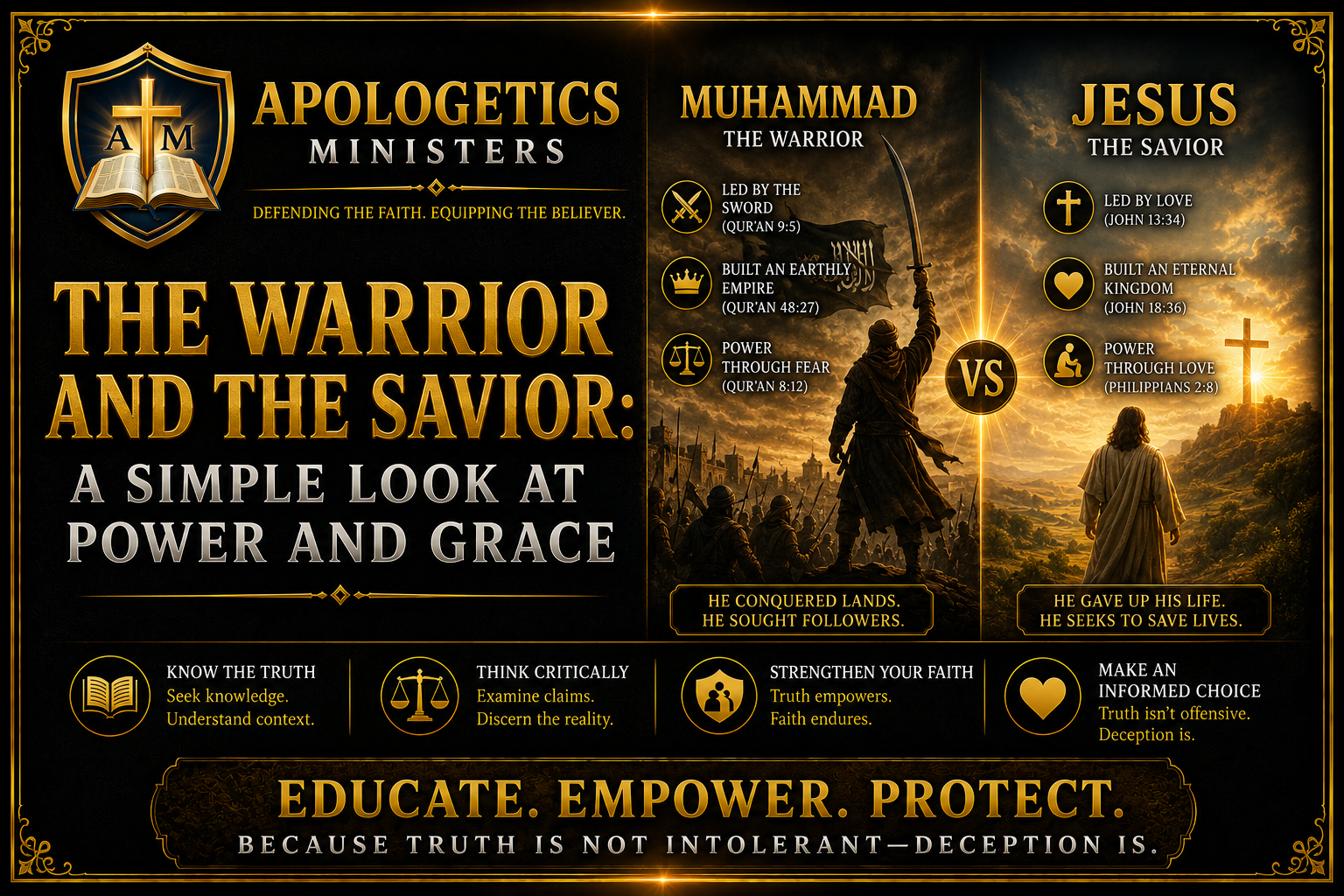

The Warrior and the Savior: A Simple Look at Power and Grace
This book looks at a famous story from Islamic history and compares it to the life of Jesus and His followers. We will look at how they treated people, how they used power, and what they believed they “deserved.”
1. The Story from the Hadith
In the book Sahih al-Bukhari (which is a collection of sayings and actions of the Prophet Muhammad), there is a story numbered 4350.
The Text of Sahih al-Bukhari 4350:
Narrated Buraida: The Prophet (ﷺ) sent Ali to Khalid to bring the Khumus (the one-fifth share of the war booty). I hated Ali, and Ali had taken a bath (after having sex with a slave-girl from that booty). I said to Khalid, “Don’t you see this?” When we reached the Prophet (ﷺ), I mentioned that to him. He said, “O Buraida! Do you hate Ali?” I said, “Yes.” He said, “Do you hate him? For he deserves even more than that from the Khumus.”
What happened here?
During a war, the army took “booty” (spoils of war), which included property and captured women. Ali, who was a leader and the son-in-law of the Prophet, took one of the captured women for himself and had sex with her.
Another man, Buraida, thought this was wrong or unfair. He complained to the Prophet Muhammad. But instead of telling Ali he was wrong, the Prophet defended him. He told Buraida that because of Ali’s high position and his service as a warrior, he actually deserved even more than just one girl from the spoils.2. What does this show about Power?
In this story, power is used as a reward. Because Ali was a great soldier and a close companion, he was allowed to take a captive woman as his prize. The “bath” mentioned in the story was a religious washing Ali did to make himself “clean” again after the sexual act.
This shows a system where:
- Women captured in war could be used for sex.
- Leaders were given special privileges because of their status.
- The Prophet’s role was to protect the rights of his loyal commanders to enjoy those rewards.
3. How did Jesus and His Apostles Act?
Now, let’s look at the “Apostles” (the 12 closest followers of Jesus). Did they go to war? Did they take captives? Did they demand “spoils”?
Jesus and the Rights of the Vulnerable
In the Bible, Jesus never led an army. He never took captives. In fact, when His followers wanted to use force or seek high positions, Jesus stopped them.
- The Apostles: Once, the Apostles argued about who was the “greatest.” Jesus told them that to be great, they must become like servants to everyone else (Mark 9:35).
- Women: Jesus treated women with total respect. He didn’t see them as “spoils” or property. He saw them as people made by God. In John 8, when men wanted to punish a woman, Jesus protected her and told the men to look at their own sins first.
4. Comparing “Deserving” vs. “Grace”
The biggest difference between these two stories is the word “deserve.”
- In the Hadith: The Prophet says Ali deserves the girl (and more) because of his work. It is a system of “I did this for God, so I get this reward.”
- In the Gospel: Jesus says that nobody “deserves” God’s favor. We are all sinners. But Jesus gives us love and forgiveness anyway. This is called Grace.
The Apostles of Jesus did not take “baths” after taking captives. Instead, they were “washed” from their sins by the Spirit of God so they could live holy lives. They didn’t want to take things from the world; they wanted to give their lives to help the world.5. Why this Matters for You
When we compare these two paths, we see two different kinds of kings:
- The Earthly King: He wins battles, takes spoils, and rewards his friends with the things of this world (like money and captives).
- The Heavenly King (Jesus): He wins by dying on a cross. He doesn’t take captives; He sets people free from sin. He doesn’t reward His followers with “spoils”; He rewards them with peace, love, and eternal life.
An Invitation:
The story in Bukhari 4350 is about a man taking what he wants because he is powerful. The story of Jesus is about a God who gives everything He has because He is loving.
Jesus doesn’t ask you to fight wars for Him so you can get rewards. He fought the battle against sin for you. He doesn’t want you to take; He wants to give you a new heart.Summary Table
| The Story of Ali (Bukhari 4350) | The Story of Jesus and the Apostles |
|---|---|
| Focuses on what a leader deserves. | Focuses on what Jesus gives freely. |
| A woman is treated as a prize of war. | Women are treated as equal and precious. |
| Religion is used to justify taking. | Religion is used to inspire giving. |
| The “bath” is a ritual after an act of power. | “Washing” is a change of heart to stop sinning. |
Which standard sounds like the true path to God? One is based on the rights of the strong; the other is based on the love of the Savior. Jesus is the only leader who never took anything from you, but gave everything for you.